

Write This: Tell It Slant
A Writing Prompt Based on the Parables of Jesus


Welcome to the June installment of Write This, where Solum presents a brief reflection and writing prompt for you to engage with in your preferred medium. You can either delve into the prompts on your own, or join our Paid Subscriber Workshops in our Substack chat, where you can submit your piece to receive enriching feedback from fellow peers and members of Solum’s masthead.

The first stories I ever loved were weird. They were about ripened fields and old, cracking wineskins. Feasts and sheep and lost coins. A deadbeat son eating like a pig. A rich man in Hades pleading for Abraham to let him lick water from a beggar’s fingers.
Any way you slice it, Jesus’ parables are bizarre, sometimes violent, and certainly confusing. As a child, that’s why I loved them. They reminded me of fairy tales. Both rise from the rich, earthy soil of what it means to be alive, but they also brim with a normalized kind of magic, or the sense of possibility beyond the material. There’s a distinct abstraction in them, a controlled absence that paradoxically signifies the reality of something else existing just below the surface.
Sometimes, though, reading them is like trying to embrace the invisible. This is especially concerning because Jesus isn’t telling us about witches in the woods or talking horses. He’s talking about the kingdom, salvation, eternal life, the most crucial things our souls will ever experience and know. Why does Jesus carve out universal truth through metaphors? Build eternity seed by seed? Say what the kingdom of heaven is like instead of what it actually is?
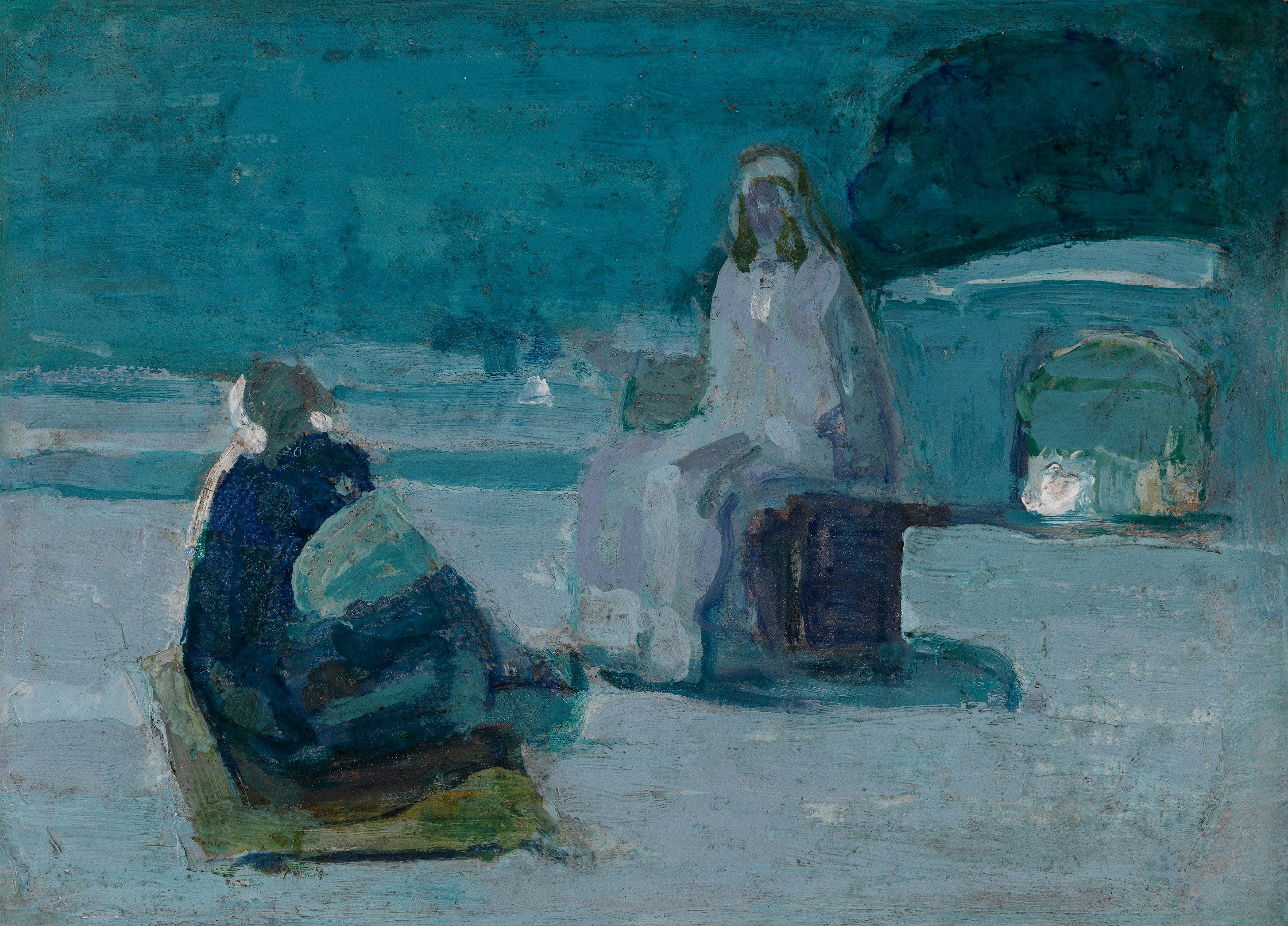
Even the disciples had these questions, and Jesus’ answer is telling: “This is why I speak to them in parables: ‘Though seeing, they do not see; though hearing, they do not hear or understand.’”1 So, the obscurity is intentional, and we’re left to wonder what in the world virgins and lamps have to do with heaven. But that’s the point: we’re left to wonder.
Obscurity is frustrating, no doubt, but Jesus uses it deliberately to achieve a vital effect on His audience. He wants people to reach a true understanding about spiritual things, one akin to a deep awareness, an ownership. Parables act as agents on our perception, even on our imagination (they’re stories, after all), precisely because Jesus wants listeners to understand His words for themselves.
Parables invite us not to certainty but to follow a profound, infinite God who’s wider, deeper, bigger than anything we could ever imagine. In short, they force us to wake up and listen close. To develop a faith that’s able to live and grow without fully comprehending all spiritual mysteries.
Emily Dickinson has something to say about this in the context of poetry. “Tell all the truth,” she says, “but tell it slant - … The Truth must dazzle gradually / Or every man be blind.”2
“The Truth must dazzle gradually” so we may better behold it as it gleams and falls. To attend to the world closely, to dwell on reality more carefully, without waste and ego—this is what parables teach us to do, and we, as writers, can glean much from their example. The best writing, I think, follows Dickinson’s advice to show the truth as a “superb surprise,”3 acting as a beam of light, a lightning strike, that helps us re-envision the world.
Sometimes, what’s absent is what the story or poem is really about. That unsaid thing beyond appearances, that idea or word softly pulsing beneath metaphor or image, can be the beating heart of what we’re writing. Jesus’ parables tug on our souls because they point to the profoundly true, something that our language cannot express or contain. They hide so they may reveal. In a way, the riddle is the answer because it invites us to seek so we may better know and understand. With this in mind, we invite you to Write This:
Using the Gospel parables as inspiration, write a piece about something without explicitly stating what it is. Try to use imagery, indirect characterization, dialogue, etc. to gesture toward it.
*For some great examples of how to write about something without directly stating it, check out “You’re” by Sylvia Plath or “Hills Like White Elephants” by Ernest Hemingway.
Today’s piece is brought to you by Solum’s friend and previous intern, Sarah Tate.
Matthew 13:13
“Tell all the truth but tell it slant,” Emily Dickinson, lines 1, 7-8
“Tell all the truth but tell it slant,” Emily Dickinson, line 4
This was such a beautiful description of the mysterious, mind-bending wonder of the parables!